

In Taiwan, visiting a temple isn't just about religious ritual; it's a vibrant, interactive cultural experience. For international entrepreneurs, digital nomads, and travelers looking to start their year with a boost of "good vibes" and prosperity, a pilgrimage to these temples is a must-do. This guide will walk you through how to participate in this ancient tradition, from "borrowing" spiritual capital to the etiquette of making a wish.
Cultural Insights: Why Visit Taiwan’s Wealth Temples?
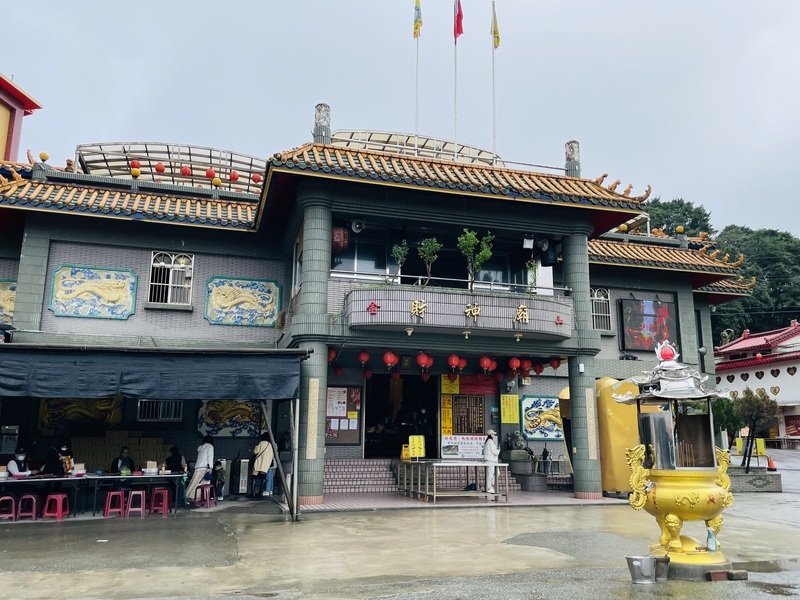
Image resource: Tripool
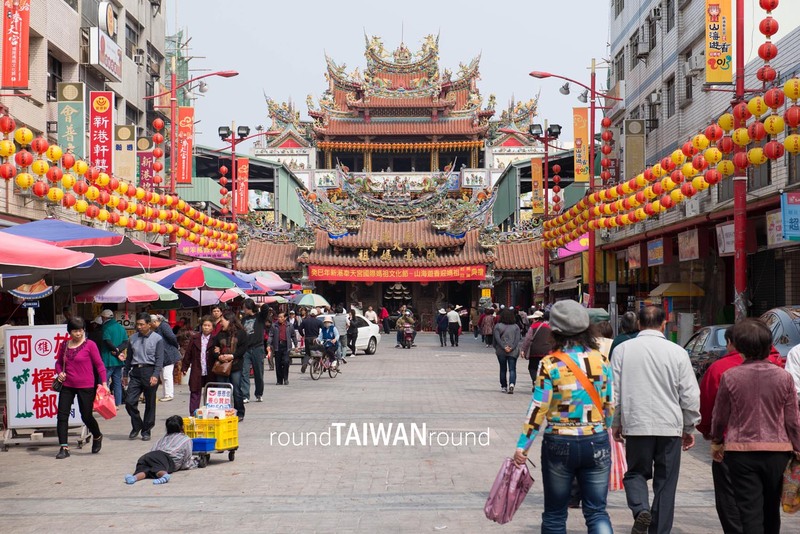
Taiwanese temple culture is unique because of its "interactive" nature. Unlike the solemn, quiet atmosphere of some European cathedrals, Taiwan's temples are lively, aromatic with incense, and deeply integrated into daily life.
- "Borrowing" Fortune: At famous temples like Zinan Temple, you don't just pray for money; you actually "borrow" a small amount of "fortune money" (Fa Cai Jin) from the deity. It’s seen as a spiritual contract—you borrow a small seed, and when your business or career flourishes, you return to repay the favor.
- Exchange for "Mother Money": You will often see a ritual called "Large Money for Small Money." You place a larger coin of your own into a bowl of "Wealth Water" and take a smaller coin blessed by the deity. This "Mother Money" is believed to act as a magnet, attracting more wealth into your wallet.
- Offerings of Joy: Forget traditional sacrifices. The God of Wealth in Taiwan is believed to have a "sweet tooth." Travelers are encouraged to offer chocolates, candies, or even bubble tea. At some temples, like Shilong Temple, the deity is famously known for loving instant noodles!
Essentials: Choosing Between Civil and Military Wealth Gods
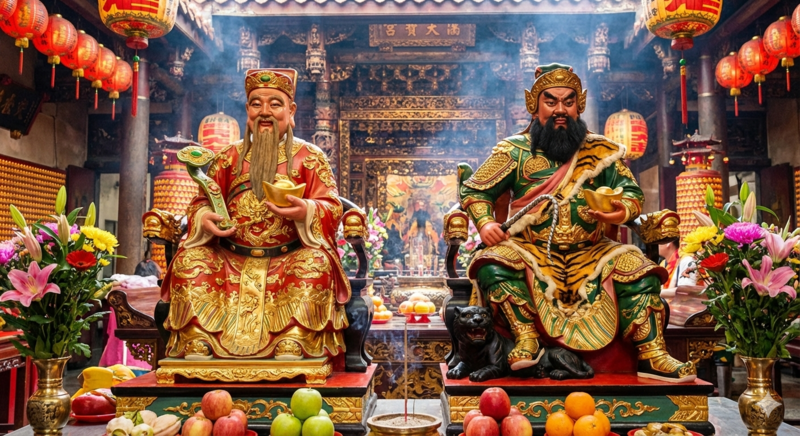
Image souce: Round Taiwan Round
Before you enter, it's helpful to know which deity fits your profession:
-
Civil Wealth God (Wen Cai Shen): Usually depicted as a calm official. He protects "stable" wealth.
- Best for: Office workers, accountants, artists, and civil servants.
- What to ask for: Promotions, career stability, and creative inspiration.
-
Military Wealth God (Wu Cai Shen): Often depicted with a black face or riding a tiger. He is the patron of "active" wealth.
- Best for: Business owners, entrepreneurs, sales professionals, and those in the tech or finance sectors.
- What to ask for: Business expansion, reaching sales targets, and competitive edges.
Top 10 Must-Visit Wealth Temples in Taiwan
Northern Taiwan (Perfect for Short Trips from Taipei)
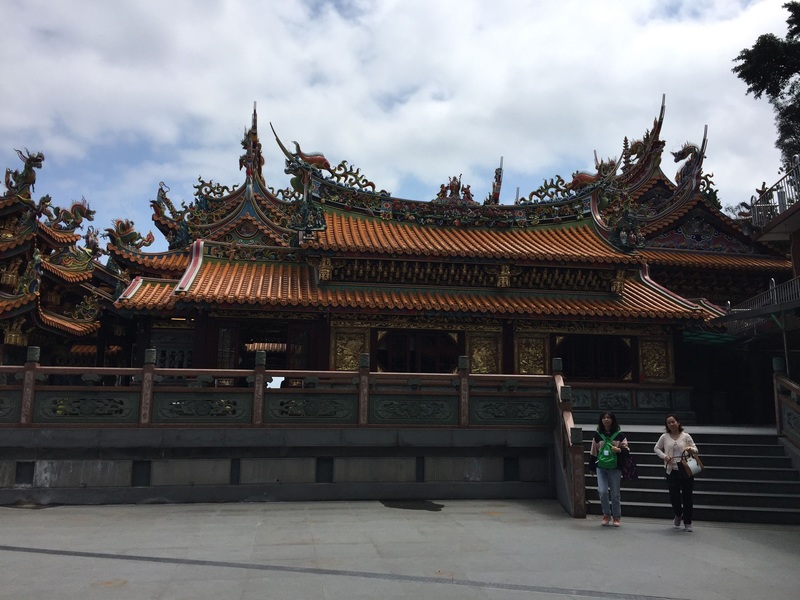
Image source: Round Taiwan Round
- Nanshan Fude Temple (Zhonghe):Open 24/7. Famous for its giant statue of the Land God overlooking the Taipei skyline. Come here at night for a breathtaking view of the city.
- Jinshan Wulu Cai Shen Temple:Located on the beautiful north coast. It features a unique "Wealth Bank" where you can "open an account" with the deity.
- Songshan Xiahai Chenghuang Temple:Situated in the heart of Taipei near the Raohe Night Market. Highly popular among stock investors.
Central Taiwan (The Powerhouses of Prosperity)
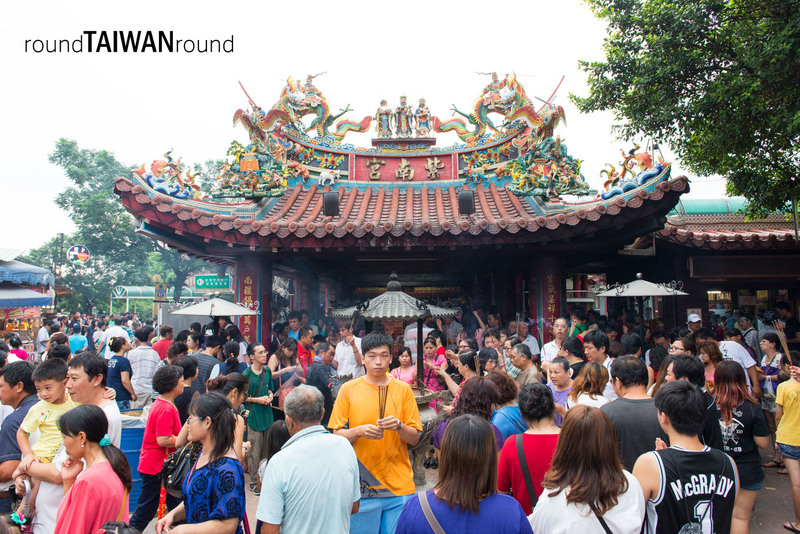
Image souce: Round Taiwan Round
- Zinan Temple (Nantou):The most legendary wealth temple in Taiwan. Millions visit annually to borrow "Prosperity Money." Don't forget to crawl through the "Golden Chicken Hole" for extra luck!
- Shilong Temple (Nantou):Known as the "Instant Noodle Temple." It’s a quirky local tradition to offer and eat instant noodles on-site to "soak up" the wealth.
- Guangtian Temple (Taichung):Home to one of the oldest golden statues of the Wealth God in Taiwan.
Southern Taiwan (Grand Architecture and Deep Traditions)
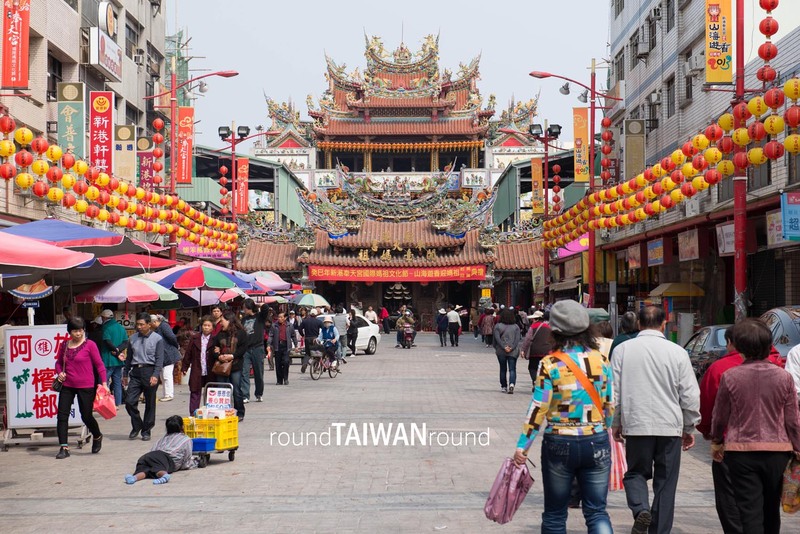
Image souce: Round Taiwan Round
- Wude Palace (Beigang): The ancestral temple of the Five Routes Wealth Gods. It features stunning modern-meets-traditional architecture and even has its own boutique café.
- Fengtian Temple (Xingang): Famous for the "Tiger God" who sits on the altar. Visitors come specifically to "exchange money water" with the Tiger God.
- Kaohsiung Guandi Temple: Here, you can buy gold leaf and stick it onto a giant golden ingot to symbolize "plating" your life with wealth.
- Fu'an Temple (Checheng): The largest Land God temple in Southeast Asia. It features a famous "automatic" furnace that sucks in spirit money like a vacuum!
Pro-Tips for International Travelers
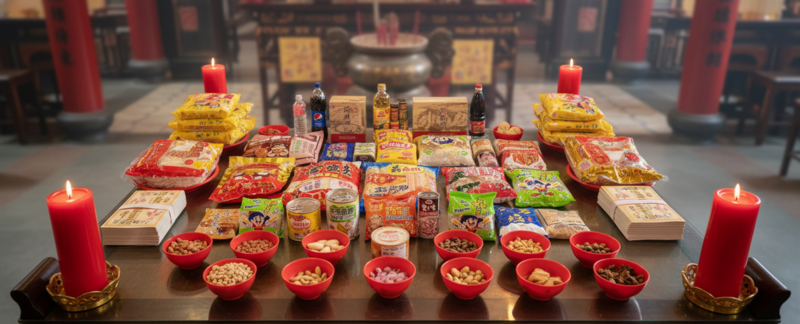
Image resource: Tripool
Shopping for Offerings: What to Buy
You don’t need to prepare anything complex; a quick stop at a local convenience store (like 7-Eleven or FamilyMart) is enough. The God of Wealth loves sweetness and joyful symbolism:
- Sweets & Snacks: Locally made chocolates, gummy bears, or I-Mei Cream Puffs. These represent a "sweet life."
- Symbolic Snacks: * Wang Wang Rice Crackers: The name "Wang" means "Prosperous"—a must-have for business growth.
- Kuai Kuai (Corn Snacks): While IT professionals use the green bags to keep machines "well-behaved," for wealth, choose the Yellow (Spiced) bags, which symbolize gold coins and wealth.
- Round Fruits: Pick up some Oranges (symbolizing "Good Fortune") or Apples (symbolizing "Safety and Peace"). Round shapes represent completeness and harmony in Chinese culture.
Important Taboos: What to Avoid
To keep the "wealth energy" flowing in the right direction, be mindful of these cultural puns:
- No "Crispy" Pastries: Avoid Pineapple Cakes or Walnut Cookies. The word for "crispy" (Shu) sounds exactly like the word for "lose" in Mandarin. You don't want your wealth to "lose" away!
- No "Hollow" Foods: Avoid Egg Rolls or Hollow Spinach. These symbolize a "hollowed-out" treasury or empty pockets.
- Avoid Harsh Flavors: Steer clear of snacks that are overly salty, sour, bitter, or spicy. The deity prefers a "happy and sweet" atmosphere.
Etiquette & Logistics
- The "ID" Check: When praying, whisper your name, your date of birth, and your current home address (even if it's in London, New York, or Sydney). This ensures the "wealth delivery" reaches the right destination across the ocean!
- Clockwise Blessing: If you receive a "Mother Money" coin or a lucky charm, remember to wave it over the main incense burner three times in a clockwise direction to "activate" its power.
- Easy Transport: Many high-energy temples (like Zinan or Shilong) are in remote rural areas. To avoid the stress of rare mountain buses or carrying heavy offerings, we recommend taking the High-Speed Rail (HSR) and then using a Tripool private car. Your driver can even stop at a supermarket on the way so you can pick up your sweets and snacks effortlessly.
Editor’s Special Recommendations: Your Extra Guide to Prosperity
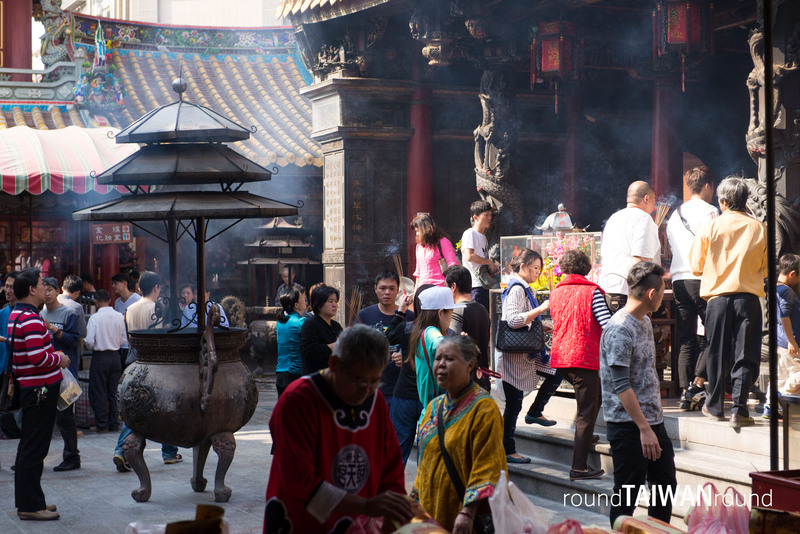
Image souce: Round Taiwan Round
To make your spiritual journey even more effective, here are three "insider tips" from our editors:
- Wear Red for Luck: In Taiwanese culture, Red is the ultimate symbol of joy, luck, and prosperity. On the day of your temple visit, try to wear at least one red item—whether it’s a shirt, a scarf, or even a small accessory. It helps you "blend in" with the festive energy of the temple.
- Maintain a Positive Mindset: The God of Wealth is a righteous deity who rewards hard work and integrity. The most important tip is to visit with a positive and honest heart. Avoid asking for "get-rich-quick" schemes or gambling luck. Instead, focus your prayers on your career growth, business success, and the ability to provide for others.
- The Golden Date - The 5th Day of the Lunar New Year: Traditionally, this is the most important day to "Welcome the God of Wealth." Most businesses in Taiwan choose this specific day to reopen after the New Year break to ensure a prosperous year ahead. If your trip aligns with the Lunar New Year, this is the peak time to experience the culture at its most vibrant.
A visit to Taiwan’s Wealth Temples is more than a quest for money; it’s a journey into the heart of Taiwanese optimism and hospitality. Whether you’re a believer or a curious traveler, the vibrant colors, the smell of sandalwood, and the shared hope for a better future make this an unforgettable travel experience.